Play Therapist and Counsellor on Pender Island, B.C.
DYLAN SPRADLIN, MA, MSW, RCC
N PERSON ON PENDER ISLAND • ONLINE THROUGHOUT BRITISH COLUMBIA
Play therapy for children and teens, and counseling for grief, neurodivergence, trauma, loss and major life transitions
My work is deeply relational, grounded in nervous system science,
and the belief that behavior always has a story behind it.
Healing begins in relationships
Sometimes the pain began before there were words for it. Sometimes it came later — through loss, trauma, relationships, or years spent trying to function in a world that never quite fit.
My work is relational, nervous-system-informed, neurodivergent-affirming, and grounded in the belief that what we do usually makes more sense when we understand what is happening underneath.
That may look like a child yelling, shutting down, refusing, running away, or melting down over the wrong colour cup. It may look like a teen who has stopped talking to the adults around them. Or an adult masking, pushing through burnout, feeling completely untethered after a loss, or suddenly reinterpreting an entire lifetime after realizing they are neurodivergent.
None of that means we have to calmly decode every difficult moment while it is happening. We are human beings, not nervous-system interpreters available 24 hours a day.
Believe me: when a textbook is thrown at your head after some particularly difficult math problems at 7:46 p.m., staying steady is both particularly important and particularly hard.
But when we begin to understand what is happening underneath the behaviour, the overwhelm, or the ways we have learned to survive, something shifts.
There is more room for steadiness, connection, choice, and something new to happen next.
Why I do this work

Like many therapists, my professional path grew out of my personal one.
I am AuDHD, and that has shaped the way I understand difference, adaptation, masking, overwhelm, and what it is like to move through systems that don’t always fit.
My own experiences with early trauma, grief, loss, and healing led me toward attachment, prenatal and perinatal psychology, relational neuroscience, and eventually this work. They continue to shape how I sit with people now: with clinical training, lived experience, steadiness, humour, humility, and deep respect for the many ways people find their way through hard things.
I’ve also never been particularly good at fitting myself into systems that didn’t make sense to me. I tend to question them, push back, or find another way. That probably shapes this work, too.
And I try to live what I ask of the people I work with.
Returning to Pender has been, in part, a coming home to myself — returning to a pace, landscape, and way of living that my nervous system knows. I think of it as living nervous-system-forward: paying attention to what helps me stay steady, connected, and present, and building a life that actually supports me so I can show up well for the people I work with.
What it’s like to work
with me
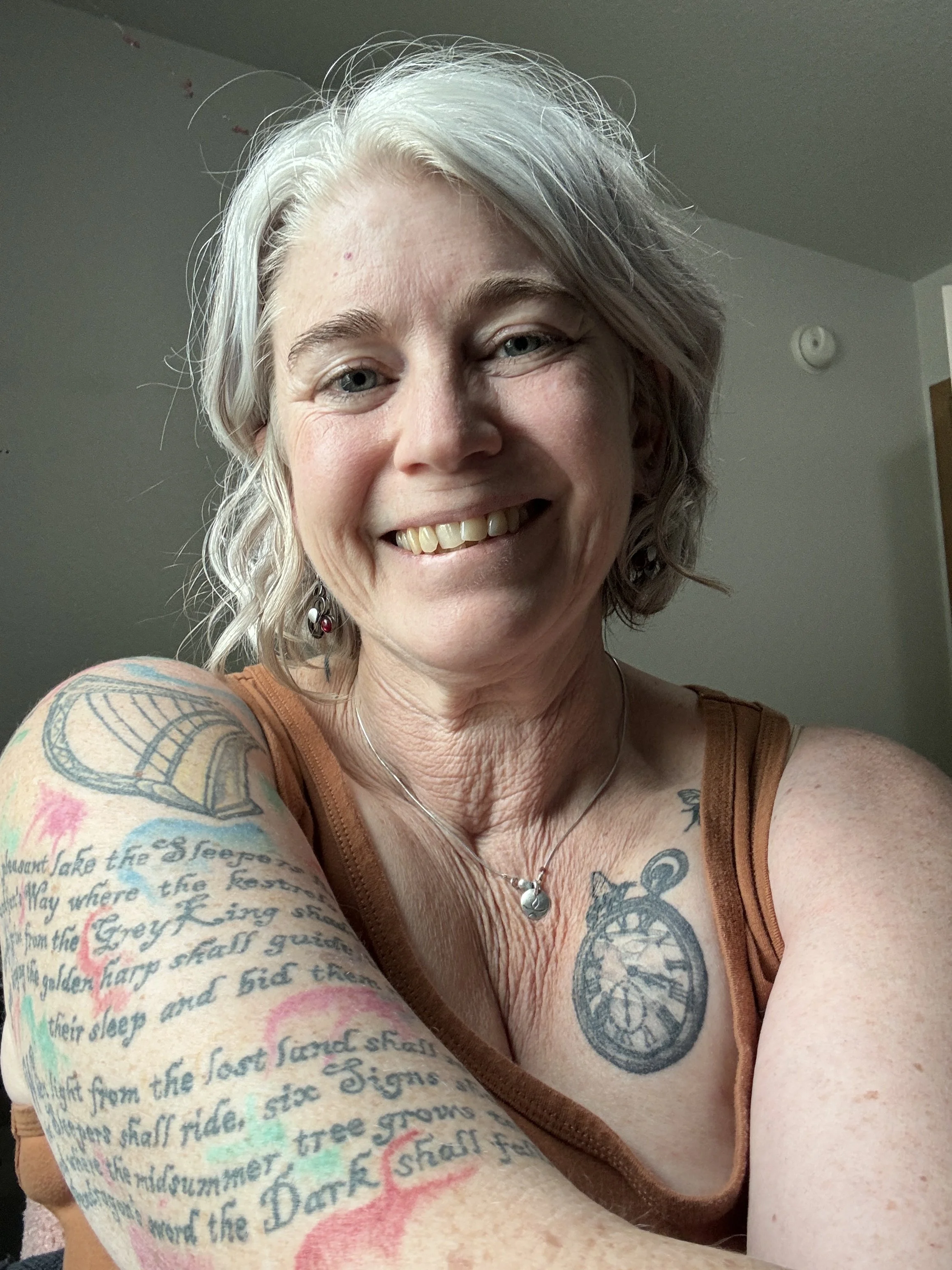
Clients often describe me as warm, grounded, deeply attuned, and authentic.
I keep a smaller caseload intentionally so I can bring steadiness, presence, and emotional capacity to the people I work with.
This is not rushed work. It is thoughtful, relational work.
I’m not interested in perfection, surface-level fixes, or forcing people to “move on,” “calm down,” or become easier to manage.
With children and teens, that means I’m much less interested in making behaviour disappear than I am in understanding what that behaviour is telling us.
With adults, it means there is no expectation that grief follow a timeline, that trauma become a tidy story, or that a neurodivergent person learn to perform “normal,” (whatever that is), more convincingly.
I’m interested in helping people understand themselves and each other more deeply — so new patterns of safety, connection, and repair can begin to emerge.

MY GUIDING PRINCIPLES
Authenticity.
No performance required. I bring my real self so you have more room to bring yours.
Safety.
Safety comes first. I work to create a space where feelings, hard stories, messy truths — and really big feelings — can be met with steadiness instead of shame.
Respect.
Every person has a story before they have words. I meet people of all ages with dignity, offer them agency, and respect for what their nervous system already knows.
Play & Creativity.
Play is not just for children.
Creativity, movement, imagination, humour, metaphor, and play give nervous systems ways to explore, express, repair, and change without needing everything explained in words.
TRAINING & EDUCATION
I’m committed to ongoing education and training so my work keeps growing, too.
-
Master of Clinical Social Work;
Walla Walla University, Missoula Campus
Master of Clinical Psychology;
Santa Barbara Graduate School
Specialization in Prenatal and Perinatal Psychology (Primary Psychology) & Infant and Child-Centered Play TherapyBachelor of Arts
The Evergreen State College;
focus on Prenatal and Perinatal Psychology.
-
Certified Synergetic Play Therapist™
learn about Synergetic Play TherapyCertified NARM™ Therapist
learn about NARMCertified Grief Informed Professional for children, adolescents and adults
Certified Clinical Trauma Professional (CCTP)
Certified Clinical LCSW Supervisor
-
Play Therapy, Youth & Family Work
Playing Perfectly: A Play Therapist’s Guide to Working with OCD
Working with Siblings in Play Therapy
Infant and Child-Centered Family Therapy
Infant Play Therapy
Aggression in Play Therapy: A Neurobiological Approach to Integrating Intensity
Creative Play Therapy Interventions for Grieving Children, Youth, and Families
Grief, Loss & Medical Trauma
Traumatic Grief: Cognitive, Behavioral, and Somatic Approaches
Mastering the Complexities of Traumatic Grief
Cultivating Post-Traumatic Growth
Reproductive, Infant, and Pregnancy Loss
Medical Trauma, Injury, and Illness
Grief in Foster and Adoptive Children and Families
Attachment, Neurobiology & Early Experience
Embodiment & Neurobiology of Secure, Insecure, and Disorganized Attachment and How to HealCultural Responsiveness
Building Cultural Inclusivity in the Playroom
Working with Native People and Communities -
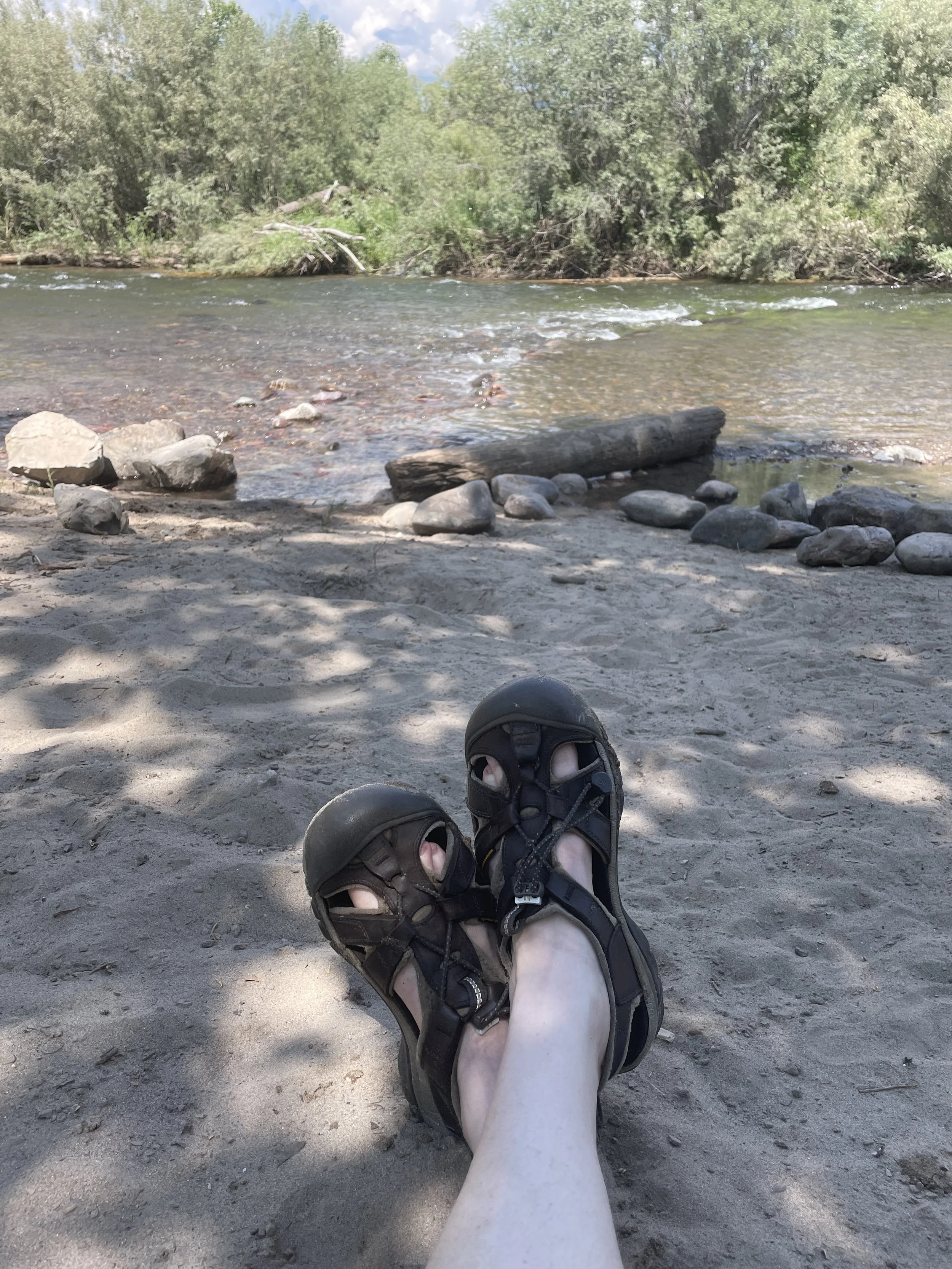
Outside the therapy space
I’m nonbinary, AuDHD, and a little allergic to prescribed ways of being a person.
I also hold opposites pretty comfortably. I love science, evidence, and understanding how things work — and I make room for the sacred, for mystery, for astrology, crystal magic, and the things we may not be able to neatly explain.
I don’t need one to cancel out the other.
Outside of my work, I’m drawn to theatre — both sides of the curtain — song, wild water, pollinator gardening, and stories: the ones we tell ourselves, the ones we live, and the ones we share.
I love river otters and guinea pigs.
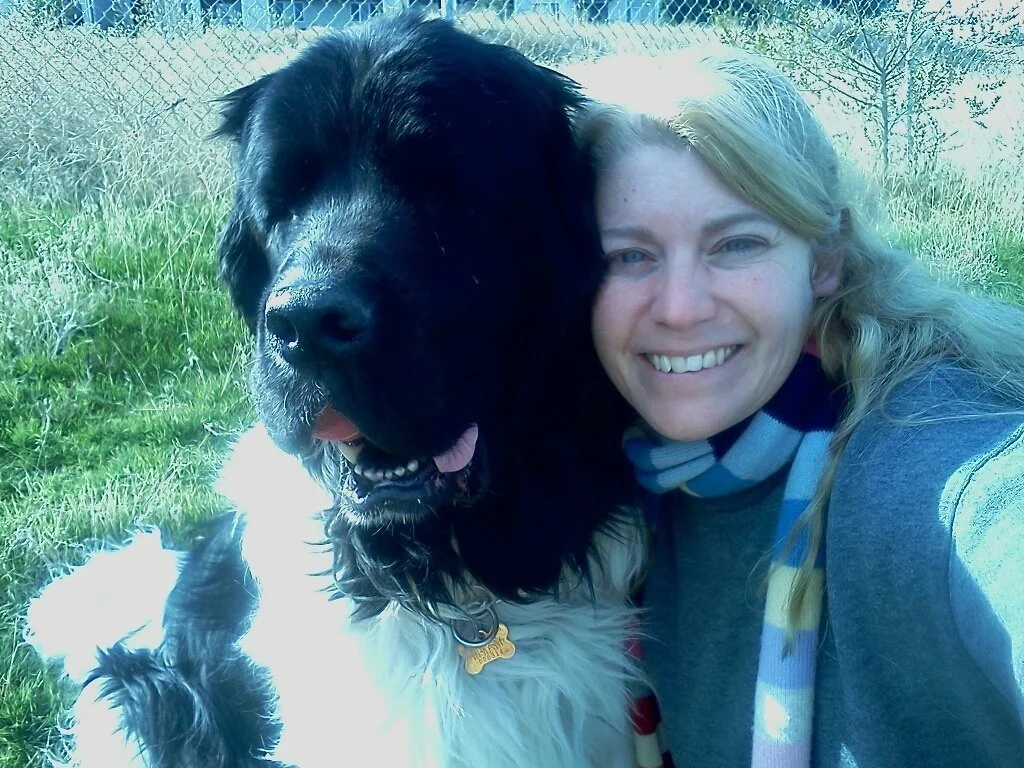
I love dogs and am particularly drawn to Newfoundlands, but will probably always have rescue dogs of whatever improbable combination of breeds finds its way to me.
I believe healing and grief both live close to beauty.
I believe nervous systems speak constantly.
And I believe people deserve spaces where they can tell the truth without fear of judgment.
Selected Publications
“Fall of the Fairies”, Mothering Magazine, Mar/Apr 2008 (print edition, under the name Dylan Emrys)
“February 16” (poem) and “Spirit of the Child” (essay), in Our Stories of Miscarriage: Healing with Words, anthology edited by Rachel Faldet and Karen Fitton, 1997 (under the name Dylan Emrys)